
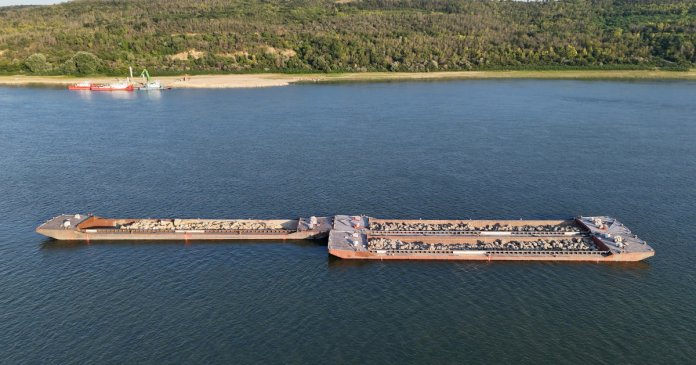

Influence of the Bar Formation on the Danube’s Discharge
The emergence of a bar along the Danube has sparked a series of significant modifications regarding the river’s discharge. This alteration has triggered a redistribution of water, impacting both the volume and speed at which it flows downstream. In certain areas, the discharge has diminished considerably, leading to a drop in water levels and affecting navigability in specific stretches of the river. Simultaneously, in other sectors, water accumulation has resulted in higher levels, creating challenges for riverside communities and economic activities reliant on a steady flow of water. Experts warn that without swift and effective measures, the impact on the affected regions could worsen, jeopardizing both human activities and the natural balance of the river’s ecosystem.
Proposed Actions for Managing the Situation
In light of this critical situation, authorities have proposed a series of actions to address the negative impact of bar formation on the Danube’s discharge. Firstly, efforts will focus on carrying out dredging and removing sediment accumulations that have contributed to bar development. These interventions could partially restore the river’s normal discharge and prevent the formation of new obstacles along its course.
Additionally, the implementation of a continuous monitoring system for water levels and discharge in critical areas is suggested, allowing for prompt intervention when necessary. This would involve installing sensors and modern equipment to provide real-time data, enabling authorities to make informed decisions and coordinate response actions more effectively.
An essential aspect is international collaboration, given that the Danube spans multiple countries. It is crucial for riparian states to work together to identify sustainable solutions and share information and resources. In this regard, organizing periodic meetings among representatives of these countries is recommended to discuss common strategies and assess the progress of implemented measures.
Lastly, the involvement of local communities and non-governmental organizations in managing the situation is necessary. Through awareness and education campaigns, the public can be sensitized to the importance of protecting the river and can actively contribute to efforts aimed at conserving and restoring the Danube’s ecosystem.
Consequences for the Local Ecosystem
The changes brought about by bar formation on the Danube’s discharge have substantial consequences for the local ecosystem. Firstly, the reduction of water levels in certain sections of the river has led to the exposure of bank areas, impacting the natural habitats of various plant and animal species. Aquatic vegetation, which relies on a constant water level, suffers due to this change, and this directly affects fauna that feeds or shelters in these areas.
On the other hand, in sectors where water levels have risen, new habitats have formed, but these are temporary and could lead to ecological imbalances. Invasive species may exploit these new conditions, threatening native species and disrupting local food chains. Additionally, water accumulations can lead to increased nutrient levels, which may encourage algae proliferation and result in eutrophication phenomena, affecting water quality and the health of the ecosystem.
Migratory birds, dependent on the Danube as a stopover location during their journeys, face difficulties in finding resting and feeding sites. This situation can influence migratory routes and potentially impact bird populations in the long term. In conclusion, bar formation and changes in the Danube’s discharge have complex effects on the local ecosystem, necessitating urgent and coordinated measures to prevent irreversible degradation.
Official Reactions and Statements Regarding the Danube Situation
In response to this alarming situation, authorities and field experts have begun to issue reactions and official statements. The Minister of Environment emphasized the importance of swift and coordinated action to prevent further deterioration, noting that the government is prepared to allocate additional resources for the necessary interventions. The need for close collaboration with other riparian states to ensure effective and sustainable management of emerging issues was also highlighted.
Representatives of the National Administration „Apele Române” declared that they are closely monitoring the evolution of the Danube’s discharge and are working on an action plan that includes both immediate measures and long-term strategies to restore the river’s hydrological balance. At the same time, they called for calm and responsibility from local communities, emphasizing that their involvement is vital for the success of any remediation effort.
Environmental organizations have also reacted, demanding transparency in official communication and an approach that emphasizes the protection of biodiversity. They also called for a detailed assessment of the ecological and social impact of discharge changes, to develop solutions that consider all involved aspects.
In conclusion, official reactions underscore the seriousness of the situation and the need for rapid and effective mobilization to mitigate the negative effects of bar formation on the Danube. It is evident that only through close collaboration between authorities, experts, and communities can a favorable resolution of this hydrological crisis be hoped for.
Sursa articol / foto: https://news.google.com/home?hl=ro&gl=RO&ceid=RO%3Aro