
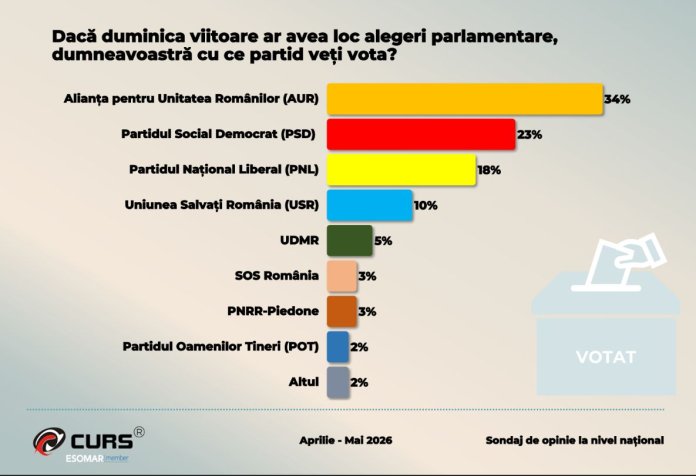

Influence of the political crisis on voting intention
The current political crisis in Romania has had a significant impact on citizens’ voting intentions, as reflected in recent polls. Political instability has led to increased uncertainty among the electorate, prompting many to reassess their political preferences. In this context, political parties have been compelled to adjust their strategies to address the growing concerns of the populace. Confidence in the government and the ruling parties has diminished, resulting in a shift in the voting intention dynamics.
The crisis has brought to the forefront issues of governance and national resource management, influencing public perception regarding the competence of political leaders. Voters are now more vigilant regarding electoral promises and the ability of parties to provide viable solutions to the economic and social challenges facing the country. This situation has led to greater volatility in voting options, as many citizens reconsider their support for traditional political formations in favor of alternatives that promise change and stability.
Popularity trends of PSD and AUR
The changes in the popularity of PSD and AUR amid the current political crisis reflect significant trends in the electoral preferences of Romanians. The Social Democratic Party (PSD) has managed to maintain a steady level of support, capitalizing on dissatisfaction with the current governance and being perceived as a viable alternative to power. Its rhetoric focused on social protection and economic development continues to attract supporters, particularly among those disappointed by the government’s economic measures.
Conversely, the Alliance for the Union of Romanians (AUR) has experienced a notable surge in popularity, taking advantage of the widespread distrust in the political class and dissatisfaction related to the management of the health and economic crisis. AUR’s nationalist and anti-establishment messages have resonated strongly with a segment of the electorate seeking radical solutions and a paradigm shift in Romanian politics. This dynamic has allowed AUR to expand its supporter base, attracting both voters disillusioned with traditional parties and those who previously did not engage actively in political life.
Both parties, PSD and AUR, have leveraged the context of public dissatisfaction to strengthen their positions in the political arena. While PSD attempts to position itself as a center-left party capable of offering stability and continuity, AUR presents itself as an unconventional opposition force, promising a thorough reform of the political system. This evolution demonstrates a growing polarization of the political landscape, with the potential to significantly influence future elections.
The situation of coalition parties
In the context of the current political crisis, the parties in the governing coalition face major challenges in maintaining unity and public support. Internal divergences and the lack of a clear consensus on governmental priorities have generated tensions among coalition members, impacting public perception of their collective efficiency. While some factions within the coalition strive to promote reforms and address public expectations, others are criticized for inaction or for prioritizing personal political interests over national ones.
These internal frictions have been exacerbated by public pressure and the necessity of managing the multiple crises the country faces, including economic, health, and social crises. In this climate, coalition parties must find a balance between the political compromise required to sustain governance and the need to maintain their identity and electoral support. This situation has led to a decline in confidence in the coalition’s ability to govern effectively, as reflected in polls showing a decrease in voting intention for the involved parties.
Moreover, the lack of cohesion and coordination among coalition leaders has been exploited by the opposition, which has sharply criticized the government’s inability to provide concrete solutions and implement coherent policies. As a result, opposition parties have gained ground in voter preferences, presenting themselves as viable alternatives and promising significant changes in governance. In this context, coalition parties must face increasing pressure to revise their strategies and demonstrate that they can overcome internal dissent to ensure the stability and progress of the country.
Romanians’ views on replacing Bolojan
The opinions of Romanians regarding the potential replacement of Bolojan from his current position are diverse and reflect a wide range of perspectives. Some citizens express dissatisfaction with his recent decisions and believe that a change could bring a fresh perspective and a different approach to managing local issues. These voters emphasize the need for a leader who is more responsive to community needs and promotes greater transparency in administrative matters.
On the other hand, there is a significant segment of the population that supports Bolojan for having demonstrated competence and dedication in his role, highlighting the development projects and modernization initiatives he has implemented. His supporters argue that stability and continuity are essential for community progress, and frequent changes in leadership can lead to uncertainty and stagnation.
Additionally, discussions about replacing Bolojan are influenced by the national political context, where trends of polarization and dissatisfaction with the political class play an important role. In this framework, voters are increasingly attentive to the individual performances of local leaders and their ability to address the challenges facing their communities.
Regardless of their stance on Bolojan’s replacement, many citizens agree that an open and constructive debate about the future of local administration is necessary. This should include a rigorous analysis of the current leadership’s achievements and failures, as well as a careful evaluation of potential candidates who could bring about positive and sustainable change. In this regard, active citizen involvement in the decision-making process is
Sursa articol / foto: https://news.google.com/home?hl=ro&gl=RO&ceid=RO%3Aro